

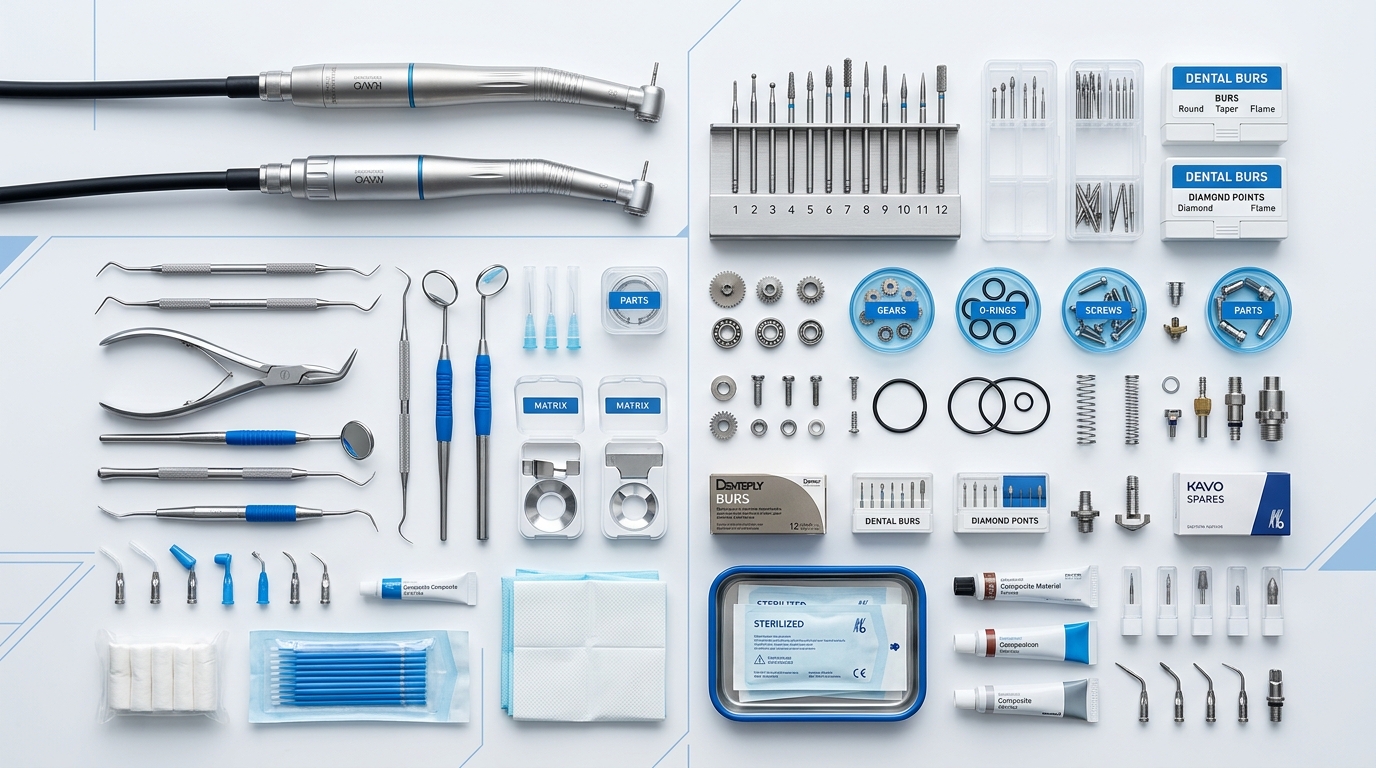
The Dental Equipment Parts Guide: Smart Ways to Cut Supply Overhead Without Sacrificing Quality
Managing a successful dental practice requires keeping a close eye on operational overhead. When a critical component on a delivery unit, compressor, or vacuum system wears out, the default reaction for many office managers is to immediately purchase an identical, branded Original Equipment Manufacturer (OEM) part.
While certain high-precision components strictly demand factory-original replacements, utilizing high-quality aftermarket dental parts can save a practice thousands of dollars annually without compromising patient safety or clinical performance.
Because our family-owned shop has spent decades sourcing both wholesale and replacement parts, we understand exactly when you should pay a premium for OEM, and when an aftermarket choice is actually the smarter business move.
OEM vs. Aftermarket: Understanding the Difference
- OEM Parts: These are manufactured directly by or explicitly for the original brand of your equipment (such as A-dec, Midmark, or Belmont). They come in branded packaging and are built exactly to the initial factory blueprint.
- Aftermarket Parts: These are produced by independent, specialized dental engineering companies. They are designed to fit and function identically to the original part, often using the exact same raw materials, but are sold without the premium brand markup.
When to Choose Aftermarket Parts (The Smart Savings)
For high-wear, standard utility components, premium aftermarket parts are frequently identical in performance to their OEM counterparts, but cost 30% to 50% less.
1. Standard Valves, Tubing, and O-Rings
Pneumatic blocks, foot control microswitches, block gaskets, and silicone handpiece tubing are standardized across the manufacturing industry. High-quality aftermarket alternatives use the exact same medical-grade polymers and tensile strengths as branded parts, making them an absolute no-brainer for routine maintenance saves.
2. Solids Traps, Filters, and Evacuator Tips
Suction filters, canister O-rings, and disposable or semi-disposable vacuum parts are designed to be swapped out frequently. Paying a brand-name premium for simple plastic molded traps or standard disposable components adds unnecessary bleed to your monthly supply budget.
3. Foot Controls and Syringe Components
Standard three-way syringe buttons, repair kits, and universal foot control pedals are highly compatible across major equipment brands. Sourcing these from a reputable wholesale distributor ensures longevity while preserving your clinic’s cash flow.
When You Should Absolutely Stick to OEM
To protect your investments and ensure total clinical precision, we always recommend sticking strictly to factory OEM parts for these specific systems:
- Handpiece Turbines: High-speed handpiece turbines spin at upwards of 400,000 RPM. The micro-bearings inside require exact factory balancing to prevent premature failure or patient injury.
- X-Ray Tube Heads & Sensors: Digital diagnostic imaging units rely on strictly calibrated electrical thresholds and radiation safety parameters. Never cut corners on intraoral X-ray components.
- Main PC Circuit Boards: A chair’s central processing motherboard contains highly proprietary programming. Utilizing a generic board can cause unexpected communication dropouts between your foot switches and hydraulic valves.
Optimize Your Supply Procurement
The secret to lowering your overhead isn’t buying the cheapest part available on the internet—it’s partnering with a trusted technical supplier who can verify part compatibility and guarantee the components they sell.
At Michigan Dental Chair Repair & Wholesale, we bridge the gap. We maintain a curated wholesale inventory of both premium OEM and vetted aftermarket replacement parts to help your practice run efficiently, safely, and affordably.
Explore our full parts store at dentalchairrepair.com, or reach out directly to our parts specialists at 248-290-9910 to find the exact, cost-effective match for your operatory equipment!