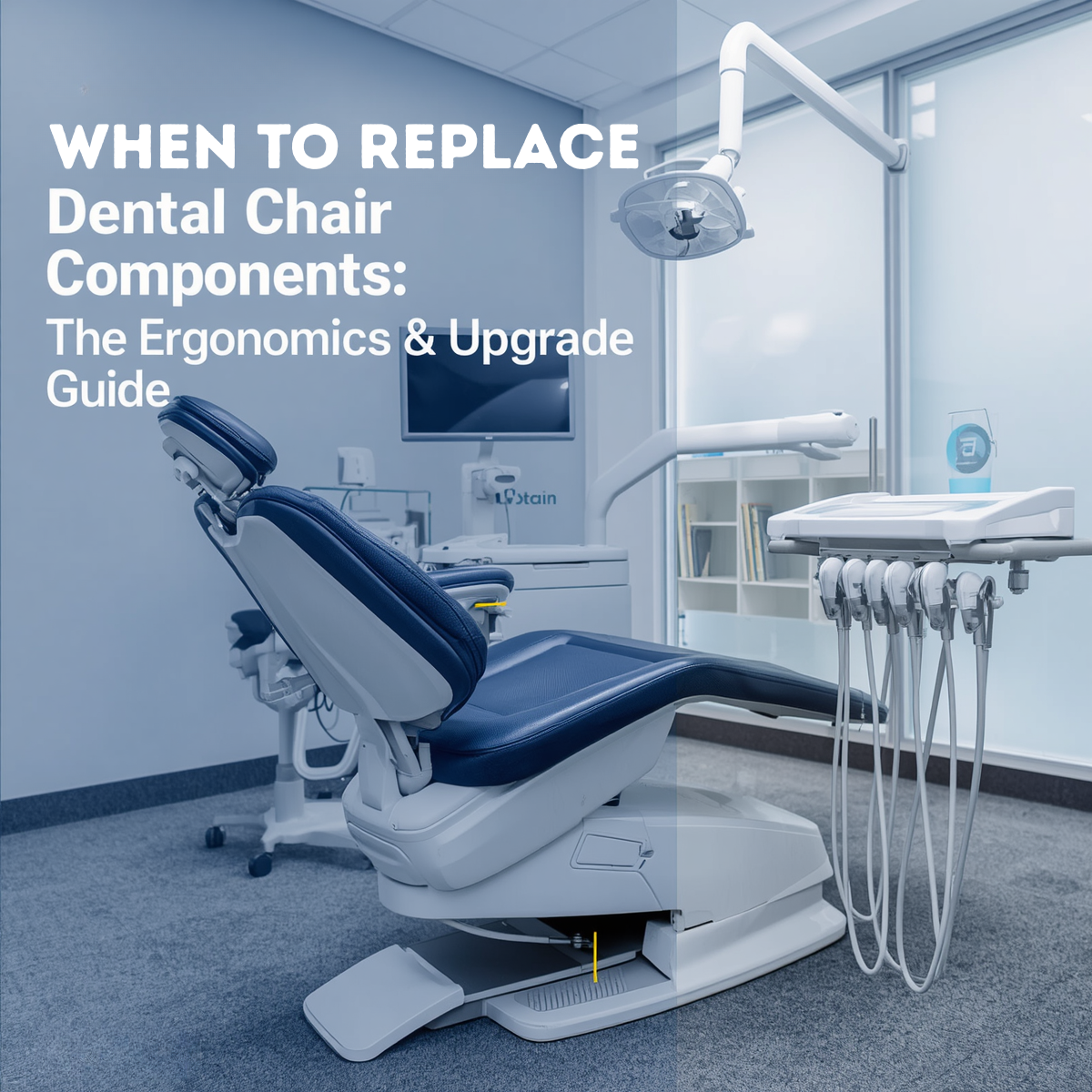
When to Replace Dental Chair Components: The Ergonomics & Upgrade Guide Knowing when to replace dental chair components versus when to invest in a complete operatory upgrade can save both your physical health and your clinic’s capital budget. Dental professionals spend thousands of hours a year leaned over patients, making physical comfort a direct driver of career longevity. If you find yourself leaving the clinic each day with persistent neck, shoulder, or lower back pain, discovering actionable ways to address these physical warning signs will prevent serious injuries without draining your administrative resources. 3 Warning Signs Your Equipment Is Hurting Your Posture Ergonomic injuries rarely happen overnight; they accumulate through repetitive micro-movements caused by failing equipment. Watch out for these three red flags in your operatory: Sinking or Drifting Hydraulic Cylinders: If your doctor or assistant stool slowly loses height during a procedure, or if the patient chair drifts slightly after placement, you are constantly forcing your core muscles to compensate. Worn out or Compacted Foam Cushioning: Over years of use, the internal ergonomic foam in dental chairs loses its resilience. When cushioning compacts, it fails to support the patient’s lumbar or your own pelvic tilt, altering your line of sight and forcing you to slouch. Stiff, Unresponsive Articulation: If the chair’s double-articulating headrest or backrest hinges require physical force to adjust, clinicians often settle for a sub-optimal patient position, straining their neck and shoulders to compensate. The Financial Decision: Repair vs. Upgrade When facing equipment failures, you have to look at both the mechanical cost and the operational impact. Use this breakdown to determine the smartest financial route for your clinic. When It Makes Financial Sense to Repair / Part-Replace Don’t replace the whole chair if you don’t have to. You should focus specifically on identifying when to replace dental chair components individually if the core structural frame remains solid. If the mechanical lift mechanism, baseplate, and electronics are running flawlessly, buying individual parts is highly cost-effective. The fix is modular: Swapping out a dried-up armrest pad, replacing a hydraulic cylinder, or installing a new foot control valve takes minimal time and costs a fraction of a new system. You can update upholstery separately: If the chair works perfectly but looks dated or feels flat, ordering a pre-sewn replacement upholstery kit restores both the structural ergonomics and aesthetics without replacing the underlying machinery. When to Pivot to a Complete Operatory Upgrade Conversely, continuing to pour money into repairs is a losing strategy if the unit relies on obsolete parts. Sourcing rare engineering creates extensive downtime, and it makes more sense to transition to a new model rather than trying to figure out when to replace dental chair components that are no longer manufactured. Furthermore, older designs lack ultra-thin backrests found on modern systems. If a chair’s bulky design prevents you from tucking your knees completely under the patient, no component replacement will ever fix your posture. Component Replacement vs. Upgrade Checklist Scenario / Issue Smartest Financial Path Why? Cracked vinyl or compressed lumbar foam Replace Components / Upholstery Restores ergonomics and cosmetic appearance at a fraction of the cost. Slow fluid leaks or failing lift cylinder Mechanical Component Repair Simple hydraulic swaps extend the lift’s life by 5–10 years. Frequent circuit board blowouts on old units Complete Operatory Upgrade Sourcing rare electronics causes chronic downtime and high labor fees. Thick backrest preventing close clinical access Complete Operatory Upgrade It is a structural design flaw that permanently compromises operator ergonomics. Finding the Ergonomic Sweet Spot Protecting your body from career-ending musculoskeletal disorders requires a proactive approach to your operatory setup. By evaluating the structural integrity of your equipment and knowing precisely when to replace dental chair components, you can prolong the lifespan of your heavy assets while running a lean administrative budget. Keep your workspace highly responsive, address mechanical issues the moment they interfere with your posture, and budget for full upgrades only when old engineering stands in the way of proper clinical mechanics.
Reducing Dental Supply Overhead: The DSO Procurement Guide
Reducing Dental Supply Overhead: The DSO Procurement Guide For Dental Support Organizations (DSOs) and multi-location practices, reducing dental supply overhead is one of the fastest paths to increasing clinical profitability. While clinical excellence remains the top priority, administrative inefficiency can quietly drain your bottom line across multiple clinics. Discover actionable procurement strategies to optimize your collective buying power without sacrificing the quality of clinical care. Among all operational expenses, clinical inventory represents a massive opportunity for optimization. Discover actionable procurement strategies for reducing dental supply overhead across multi-location clinics and DSOs without sacrificing clinical quality. The Challenge of Decentralized Purchasing When dental practices scale from a single office to a multi-location network, purchasing habits often remain stuck in the past. If individual office managers or lead assistants are left to order supplies independently, your organization suffers from decentralized purchasing. This fragmentation leads to: Redundant Vendor Accounts: Multiple clinics ordering the exact same items from different distributors at varying price points. Lost Volume Discounts: Missing out on bulk pricing structures because your total order volume is fractured across individual transactions. Inventory Bloat: Over-ordering and product expiration due to a lack of centralized oversight. To shift from a reactive spending model to a strategic one, multi-location practices must leverage their collective buying power. Actionable Strategies for Reducing Dental Supply Overhead Implementing a centralized procurement framework doesn’t mean restricting your clinicians from getting the high-quality tools they need. Instead, it introduces efficiency into how those tools are acquired. 1. Consolidate Your Vendor Footprint The most effective method for reducing dental supply overhead is limiting the number of vendors you buy from. Instead of juggling dozens of niche suppliers, audit your historical spending and consolidate your purchasing power under a select few primary distributors. This instantly elevates your status to a high-volume account, giving you the leverage needed to negotiate preferred formulary pricing, waived shipping fees, and dedicated account support. 2. Establish a Standardized Product Formulary Work alongside your clinical directors to establish a standardized list of approved supplies—from impression materials to PPE. Standardizing your inventory narrows down the variety of products purchased across your organization. By driving higher volume toward fewer specific SKUs, you create a highly predictable purchasing pattern that major manufacturers are eager to discount. 3. Implement Centralized Procurement Software DSOs cannot effectively manage spending through manual spreadsheets. Utilizing a centralized inventory and procurement platform allows management to see exactly what is being spent at each location in real time. Approval Workflows: Set strict monthly budget caps for individual clinics, requiring corporate approval for orders that exceed thresholds. Automated Reordering: Leverage data to reorder items based on actual clinical utilization rather than guesswork. Multi-Location Procurement Comparison Procurement Strategy Small Group Practice (2–4 Locations) Scaled DSO (5+ Locations) Vendor Selection Preferred distributor agreements. Direct-to-manufacturer and formulary contracts. Ordering Process Standardized order guides per office. Centralized procurement software with strict approvals. Overhead Impact Eliminates immediate order duplication. Drives massive, predictable volume discounts across the board. Protecting Clinical Quality While Cutting Costs The primary objective of reducing dental supply overhead should never be a race to the bottom on price alone. Using sub-par materials leads to clinical failures, remake expenses, and chair-time delays—all of which cost far more than any upfront supply discount. True strategic sourcing focuses on maximizing vendor relationships and eliminating administrative waste. By streamlining your administrative processes and consolidating vendor spend, your DSO can achieve world-class clinical safety margins while running a lean, highly profitable operation.