

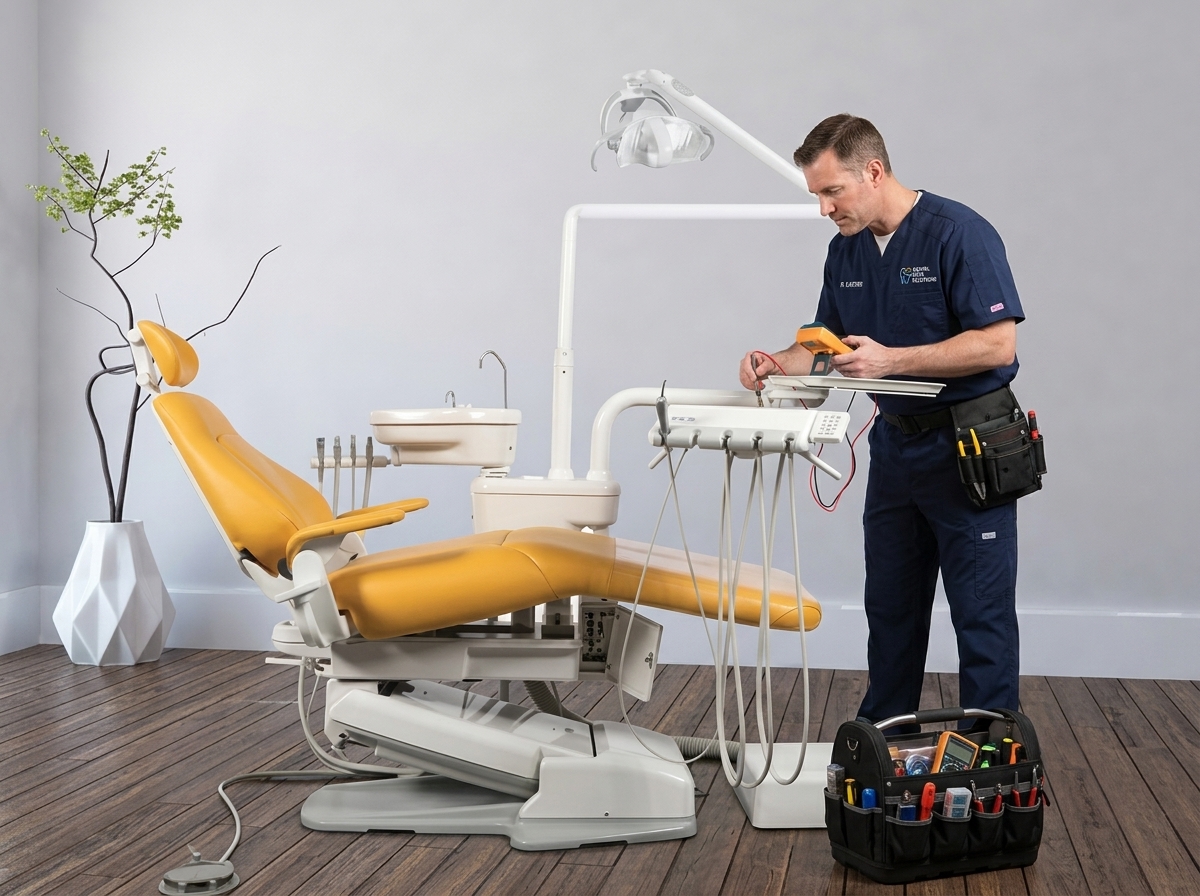
The “Dead” Dental Chair: 3 Quick Checks Before You Call a Technician
Every dental office manager or practitioner knows the sinking feeling. You have a full schedule of patients waiting, your first appointment is settled in, you hit the foot pedal—and absolutely nothing happens. The chair is completely dead.
Before you pick up the phone for an emergency service call-out (and face the resulting practice downtime), there is a distinct difference between a catastrophic component failure and a simple, fixable issue.
Because we have been repairing, overhauling, and supplying wholesale dental parts since 1968, we’ve learned that a massive percentage of “dead chair” emergency calls can be solved in less than five minutes by checking three basic components.
Here is your quick-fire diagnostic checklist to run through before you call a technician.
Check 1: The Master Toggle Switch (and Hidden Cut-Offs)
It sounds incredibly obvious, but you would be amazed at how often a chair is “restored to life” simply by flipping a switch.
- The Main Switch: Dental chairs typically have a master power toggle located near the floor on the base housing, or tucked directly under the delivery unit frame. During routine daily cleanings, a mop or a stray foot pedal can easily bump this switch into the “Off” position.
- Safety Shut-Off Plates: Modern chairs feature safety limit switches or safety plates underneath the base or backrest. If a stool, a trash can, or a stray wire is pressing against these plates, the chair will automatically lock up and refuse to move to prevent crushing the object. Clear the floor space entirely around the base cantilever and see if functionality returns.
Check 2: The Main Infrastructure (Compressor & Power Strips)
A dental chair relies on a delicate balance of electrical power and pneumatic (air) pressure to operate. If one of these utility lines fails at the source, the chair stays grounded.
- Test the Outlet: Unplug the main power cord from the wall or floor box and plug in a small device you know works (like a phone charger or a small lamp). If the outlet has no power, check your clinic’s main breaker box.
- The Air Compressor Gauge: If the chair turns on but your handpieces are dead and the pneumatic components refuse to budge, check your central air compressor. Ensure the master pressure gauge reads correctly between 6 to 8 bar. If the compressor has tripped or a line is leaking, your chair will have zero operational pressure.
Check 3: The Internal Main Fuse
If the wall outlet has power but the chair’s status lights are completely dark, a blown fuse is the absolute number one suspect. Fuses are intentionally designed to “die” to protect the expensive main circuit boards from electrical surges.
Roson Dental
- Where to look: Most dental units feature a small, accessible glass fuse holder right next to the main power switch or where the electrical cord feeds into the base.
- How to inspect it: Safely unplug the unit from the wall first. Twist or pop open the small plastic fuse cap. Hold the small glass tube up to the light. If the thin wire inside is broken or the glass looks smoky and black, the fuse is blown. Replacing it with an identical, correctly rated fuse (often a simple 1-Amp or matching manufacturer spec) can instantly fix a dead chair for pennies.
When It’s Time to Call in the Experts
If you have verified the power outlet, cleared the safety plates, checked the compressor pressure, and verified the fuse is intact—but the chair still won’t respond—you are likely dealing with a failed foot control cable, a damaged solenoid valve, or a malfunctioning main control board.
Roson Dental
Attempting to deep-dive into high-voltage wiring or complex hydraulic lines without proper training can void your manufacturer warranties or risk creating serious electrical hazards.
Need a fast fix or looking for specific replacement wholesale parts? The team at Michigan Dental Chair Repair & Wholesale is here to keep your clinic operational. Browse our online parts inventory at dentalchairrepair.com, or reach out to our technical repair team directly at 248-290-9910 to schedule professional field service!