
Meeting Compliance: The Complete Dental Unit Waterline Maintenance Checklist
Maintaining clean dental unit waterlines (DUWLs) is no longer just a best practice—it is a strict regulatory necessity. Because dental lines are narrow, flexible, and subject to stagnant water conditions overnight, they are the perfect breeding ground for microscopic biofilms.
If left unmanaged, these biofilms can shed bacteria directly into your patient delivery systems, failing safety inspections and putting vulnerable patients at risk.
At Michigan Dental Chair Repair & Wholesale, we don’t just fix the structural mechanics of your chair; we help you protect the vital infrastructure running through it. Based on current safety guidelines, here is your straightforward, step-by-step clinic checklist to ensure your water lines stay completely clear, compliant, and safe.
1. The Daily Protocol: Purging the Lines
Biofilm thrives when water sits completely still. A simple daily purging routine drastically reduces structural bacteria buildup.
- Morning Flush: At the start of every clinic day, discharge water and air from all lines (handpieces, three-way syringes, and scalers) into a bucket for at least 2 minutes. This clears out any stagnation that occurred overnight.
- Between Patients: Flush all water-cooled lines for a minimum of 20 to 30 seconds between every single patient appointment to clear out potential back-siphonage materials.
2. The Weekly Protocol: Treatment & Shocking
Flushing alone will not strip away an established, sticky biofilm matrix. You need active chemical treatment.
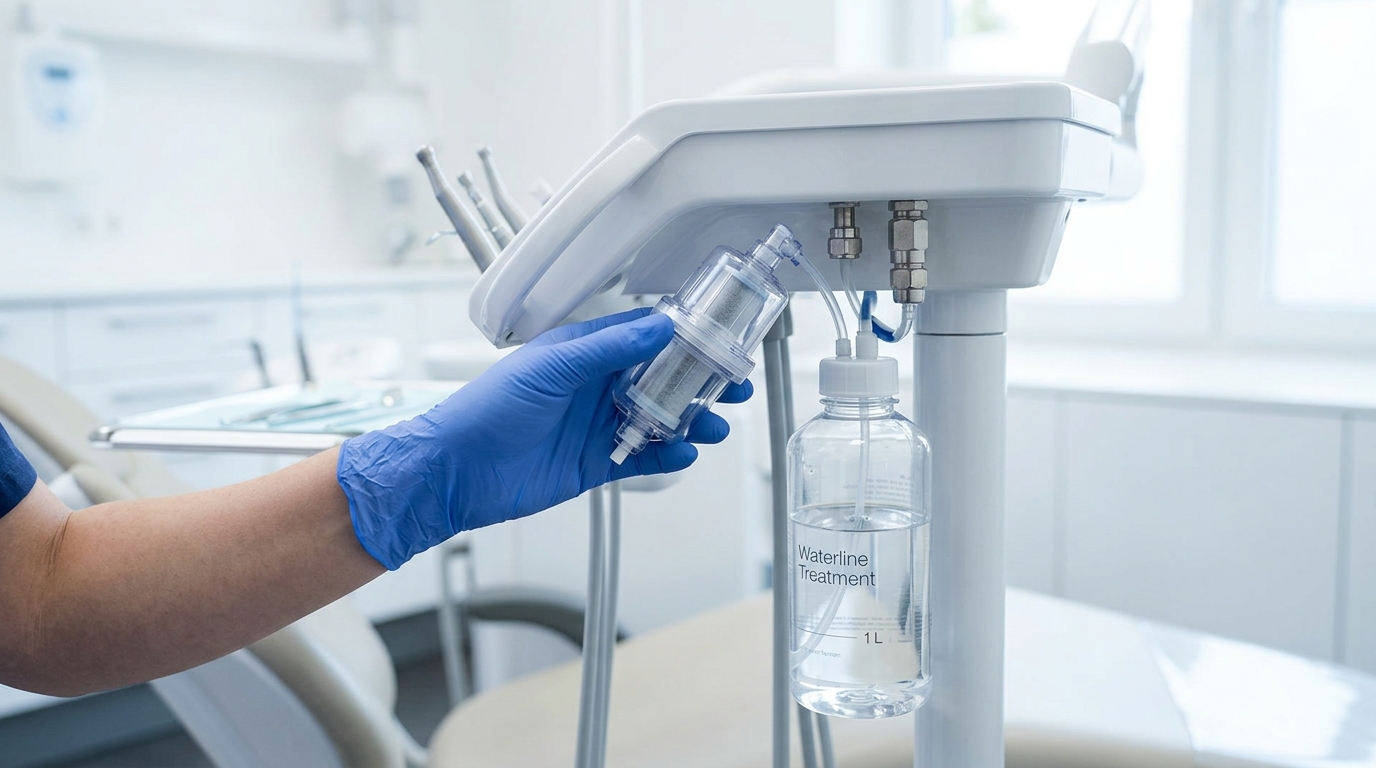
- Independent Water Bottle Systems: If your chairs utilize clean-water bottles, ensure your staff is using a continuous treatment method—such as daily antimicrobial tablets or specialized dropped-in silver straw cartridges.
- The Shock Treatment: Periodically (often weekly or monthly depending on the product), your lines need a aggressive chemical “shock” treatment using an approved microbial agent to completely dissolve stubborn, structural line buildup. Always remove high-speed turbines and scaling tips before shocking to prevent clogging delicate handpiece ports.
3. The Quarterly Protocol: Independent Testing
You cannot manage what you do not measure. The only way to prove compliance to inspectors is through documented testing.
- The Safety Threshold: Standard regulatory guidelines state that dental treatment water must contain less than or equal to 500 CFU/mL (colony-forming units per milliliter) of heterotrophic water bacteria.
- Documenting Results: Utilize in-office paddle test kits or mail-in laboratory services at least once a quarter. Keep these physical logs filed safely in your office manager’s compliance binder. If a line fails, shock the system immediately and re-test.
Protecting Your Valves and Solenoids
An overlooked benefit of clean waterlines is equipment longevity. When thick biofilm or mineral scaling builds up in your lines, it breaks loose and migrates down the system, jamming the tiny, precision copper solenoid valves and water relays inside your chair’s delivery head. Maintaining clean lines saves your clinic from both compliance headaches and expensive plumbing repair bills.
Looking to optimize your utility layout or need wholesale maintenance supplies? The team at Michigan Dental Chair Repair & Wholesale has been keeping Waterford Township practices running safely since 1968. Browse our full online inventory of replacement valves, tubing, and maintenance parts at dentalchairrepair.com, or call our technical line directly at 248-290-9910 for field service support!